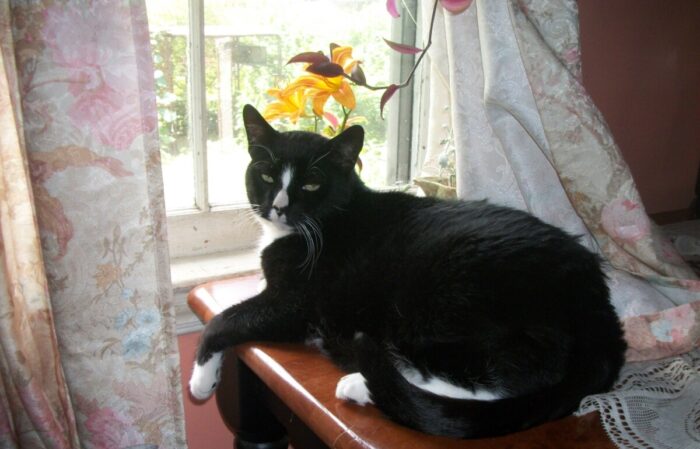
The cat used up one of his lives in June, 2024. I’d never know how many lives he may have left because he lived on the street before we met. He showed up in the backyard near a Maple tree. He looked like he escaped from a wedding photo shoot, complete with his natural tuxedo.
He was handsome indeed, and didn’t fit the description of an alley cat. I encountered him a few times in the yard and meowed at him. He meowed back. We kept it up and he really seemed to have a lot on his mind.
All the cats I’ve had were street rescues. Even the ones I brought back from Texas. However, most alley cat encounters never allowed closeness. The Tuxedo cat was an exception.
He entered the scene a few months after the loss of another Tuxedo cat, except that one was a beautiful dark charcoal grey and white, known as The Lieutenant. Tuxedo cats are not always black and white (nor are they considered a breed). It’s the bicolor pattern of the cat that determines the type, according to Cats.com.

The loss of The Lieutenant was devastating. Before acquiring him, he was tested for FIV (Feline Immunodeficiency Virus), also known as AIDS. He was negative. Six years later, he suddenly presented with illness and died during the night after his vet visit. The next day his test came back positive for the virus. Even the vet was surprised at how quickly he succumbed.
Upon seeing the resemblance of the new Tuxedo cat’s coloring and size, I felt like The Lieutenant was sending a message – He couldn’t stay here anymore but he’d send another to help me with his loss.
Settling In
The winter was already in full swing. I kept leaving food out for the Tuxedo cat and eventually invited him in. He followed me around the house and kept grabbing my leg. By midnight, I told him he should probably be getting home. It was well past curfew and someone might be missing him.
I went outside with him and we stood in the cold night air. I thought he would head out into the alley. He stayed by my side. Perhaps there was no home to go to. Back inside we went.
He was staying close to the back door perched on a basement step. I brought blankets, a pillow and camped out on the kitchen floor nearby. We were strangers gradually building trust.
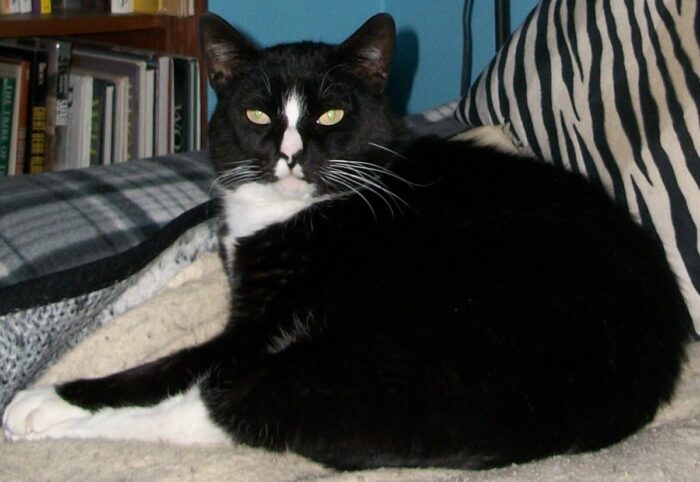
Upon testing negative for leukemia and AIDS, he was neutered and we lived together for years. He wasn’t outside long enough to develop a tolerance for thunderstorms or fireworks. Both caused him to hide under the loveseat or bed.
Neither thunderstorms nor fireworks were present the evening he was growling and hiding under the bed. Growling was never part of it. He kept moving around and couldn’t get settled. He felt swollen on one side when I tried to comfort him.
The Hospital
My suspicion was confirmed by the vet when he was taken as an emergency patient the next morning. He had a urinary obstruction. The swelling was his bladder. The vet suspected lots of debris in the urethra. He was in danger of his bladder rupturing and becoming toxic from not being able to urinate.
The plan was to insert a catheter to dislodge the obstruction and flush the bladder. He needed antibiotics and pain medication. He’d have to stay in the hospital a couple days with the catheter in place to observe good urine flow. Then the catheter could be removed and he’d be watched to ensure urine flow continued.
The vet warned me that he’d need an X-ray to ensure no stones were in his bladder and blood work to check for kidney issues. If his kidneys were seriously affected, he’d need an IV. Otherwise, fluids under the skin should be enough to flush his bladder. A minimum of $600 – $800 was to be expected for his care.
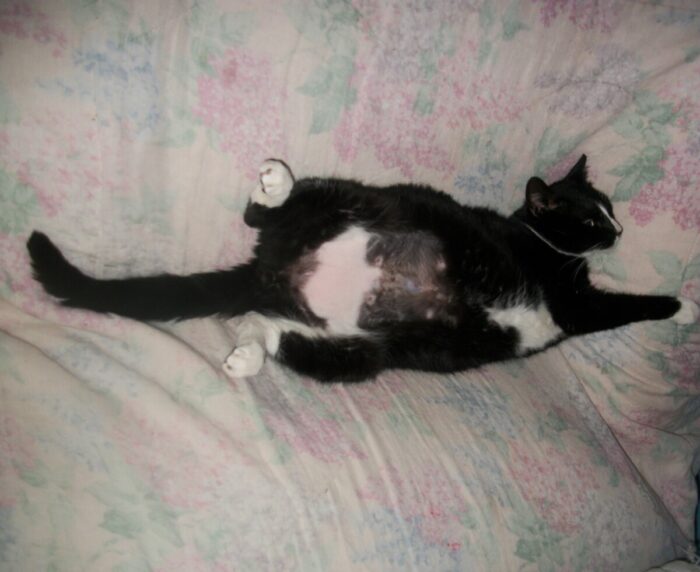
The next day I got a call I wasn’t expecting. The funnel-shaped Elizabethan collar was needed to prevent him from messing with the catheter. Overnight, the cat managed to not only remove the collar but the catheter as well. I’ve never seen the layout of this hospital in back but thought he’d be a bad influence if other animals saw him do this.
This Houdini-type of action to escape his treatment resulted in the need for surgery to flush his bladder instead of the catheter. His hospital stay extended to five days. The bill was close to $1,200.00. That wasn’t even counting the special prescription diet he’d need for the rest of his life.
“Urinary blockages in cats can turn a routine day into a critical emergency,” according to Care First Animal Hospital. About 10% of male cats may experience a urinary blockage, often being fatal within 24- to-48 hours if not treated immediately.
Once home the Tuxedo cat looked at me differently. He was less abusive toward me and showed appreciation. Our relationship was further cemented.
