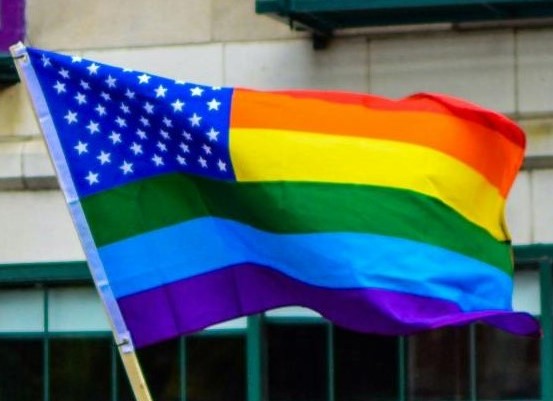
A favorite nationally syndicated radio talk-show is “America at Night” with Rich Valdes. He’s on from 9 p.m. – 12:00 a.m., Central time (Chicago) on WLS-AM 890. Valdes describes himself as our “Liberty-loving Latino Amigo.” Although Conservative, he has a Liberal following as well. If anyone disagrees with him or is a first-time caller, you get moved to the top of the caller line.
Valdes has many guests and interviews politicians, doctors, scientists, financial experts, religious leaders, etc. I happened to tune in at the end of an interview with a lesbian. Afterward, Valdes says he’s spoken with many Conservative gay people and follows a group called “Gays Against Groomers (GaysAG).”
The group is “An organization fighting back from inside the community against the sexualization, indoctrination and medicalization of children happening under the guise of LGBTQIA+,” according to their website.
The group formed in 2022 and their mission is to “end the war on children being carried out in our name, and to reclaim the community we once called our own, which at this point, has become unrecognizable.”
Pride Parades
The Stonewall riots in June, 1969, when homosexuality was a criminal offense, sparked the LGBTQ civil rights movement, reports National Geographic. The riots led to the first Pride parade a year later in New York.
Gays and lesbians wanted people to see that they are no different than anyone else and were not a threat. They marched for equality and the right to marry just like everyone else.
The first legal gay marriage in the U.S. wasn’t until 2004 in Cambridge, MA. However, it wasn’t until 2015 that a Supreme Court landmark ruling guaranteed same-sex couples the right to marry in all 50 states, after an “excruciatingly drawn-out battle” by LGBTQ activists, according to GaysAG.

We see some of the Pride parades on TV but according to GaysAG, some of what goes on cannot be televised. Their stance on such parades is eye-opening —
Pride parades used to be a family-friendly celebration of same-sex relationships and loving who you wanted to love. Allies attended, sometimes with their children, to help them understand they were free to partner with who they loved and would be supported.
Over time, that “celebration” has been exploited by “debauchery and sexualization including adults selling sex toys, kinky behavior, teaching kids to pole dance, and drag queens.”
Drag queen performances are considered adult cabaret entertainment and don’t belong in the presence of children including ‘story-hours’ at libraries, according to GaysAG. They recommend more age-appropriate story characters, such as, princesses, or puppet shows, musicians and clowns for children’s entertainment.
Because of such displays at Pride parades nowadays, GaysAG no longer supports kids attending them — “They’ve become too obscene and has damaged the public’s perception of gay people. We are embarrassed of what Pride has become and are tired of seeing adults acting depraved in front of children in our name.”

Back in the (School) Day
The earliest I recall sex education in school was about the 7th grade, age 12. Mr. O’Neill issued a stern warning to the class that if anyone thought this was funny, we would have to sit in an empty classroom and write nursery rhymes. There was no such thing as LGBTQ nor any discussion on homosexuality in my class in the 70s.
In junior high school, I was surprised and impressed when the class received books on controversial subjects. Go Ask Alice dealt with drugs. Lisa, Bright and Dark dealt with mental illness. Black Like Me dealt with racism. My mom told me to not let my dad see that one. He would not have taken on the school board but it would have led to a rant.
Nowadays the books allowed in grade and pre-schools have become more controversial — not the subject matter but the age they’re being introduced to children.
Examples include A is for Activist, an ABC book for the next generation of progressives: families who want their kids to grow up in a space that is unapologetic about activism — environmental, civil or LGBTQ rights. Target age 3 – 5.
Prince & Knight is a modern fairy tale where a noble prince and a brave knight fall in love when they pair up to defeat a monster. Ages 3 – 5. I recall rumors later in life that Batman and Robin were gay but as a child, I was only interested in their capers.
Born Ready is about a transgender boy’s decision to share his gender identity with his family and the world. Ages 4 – 8.

A couple of these books, labeled as language arts, have become the focus of a Supreme Court case, reported by PBS. Some parents in Maryland felt their religious rights were being violated, as they didn’t want their grade school kids exposed to the subject matter.
It was a relief to read that GaysAg believes there is a firm difference between education versus indoctrination. The group expresses the need for children to be children and not exposed to ideologies that prioritize sexuality and identity above age-appropriate practical learning skills.
We’ve touched on only two of GaysAg’s purpose — sexualization and indoctrination of children. The third is medicalization and deserves its own space.
